|
booksmusicfilmstv.com Home Books Music Films TV Peace & Freedom Press List of Poets Classic Poems
Matthew Arnold Books The Poems of Matthew Arnold 1840-1867 A Gift Imprisoned : The Poetic Life of Matthew Arnold
Selected Classic Poems booksmusicfilmstv.com Poets booksmusicfilmstv.com Writers
|
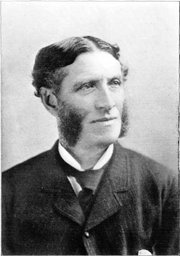
Matthew ArnoldFrom Wikipedia, the free encyclopedia
Matthew Arnold (24 December 1822 – 15 April 1888) was an English poet and cultural critic, who worked as an inspector of schools. He was the son of Thomas Arnold, the famed headmaster of Rugby School. Life and careerMatthew Arnold was an English poet and cultural critic, who worked as an inspector of schools. He was the son of Thomas Arnold , the famed headmaster of Rugby School. He was born in Laleham, Middlesex in the year 1822. In 1836 he went to Winchester College and then completed his school education at Rugby School where he won school prizes for English essay writing, and Latin and English poetry. In 1841 he won an Open Scholarship to Balliol College, Oxford, where his keen bantering talk made him something of a social lion among Oxford men. He demonstrated his burgeoning talent as a poet by winning the Newdigate prize for poetry in 1843 with his Cromwell and graduated in the following year with a 2nd Class Honours degree. In 1845, after a short interlude of teaching at Rugby, he was elected Fellow of Oriel College, Oxford, accounted a great distinction at Oxford since the days of Keble, Newman, and Dr. Arnold himself. In 1847 he became private secretary to Lord Lansdowne, Lord President of the Council. This position was, almost to the end of his life, to absorb the greater part of his time and energies, and may have been partly responsible for the smallness of his poetical output. In 1849 he had published his first book of poetry, The Strayed Reveller, which he soon withdrew. These early works were largely met with critical scorn. He was later appointed Professor of Poetry at Oxford, an honour which, though it did not pay much, must have felt like vindication for Arnold.
In prose he wrote 'On Translating Homer , On the Study of Celtic Literature , Essays in Celtic Literature, Essays in Criticism, 2nd Series Culture and Anarchy , Friendship's Garland , Literature and Dogma , God and the Bible , Last Essays on Church and Religion , Mixed Essays , Irish Essays , and Discourses in America . He also wrote some works on the state of education in mainland Europe. Writings: Poetry and ProseArnold wrote during the Victorian period (1837–1901), and is sometimes called the third great Victorian poet, behind Alfred Tennyson, 1st Baron Tennyson and Robert Browning. Arnold himself was keenly aware of his place in poetry, and in an 1869 letter to his mother, discussed the merits of his work and his two more famous peers: "My poems represent, on the whole, the main movement of mind of the last quarter of a century, and thus they will probably have their day as people become conscious to themselves of what that movement of mind is, and interested in the literary productions which reflect it. It might be fairly urged that I have less poetic sentiment than Tennyson, and less intellectual vigour and abundance than Browning. Yet because I have more perhaps of a fusion of the two than either of them, and have more regularly applied that fusion to the main line of modern development, I am likely enough to have my turn, as they have had theirs." His literary career — leaving out the two prize poems — had begun in 1849 with the publication of The Strayed Reveller and Other Poems by A., which attracted little notice — although it contained perhaps Arnold's most purely poetical poem "The Forsaken Merman" — and was soon withdrawn. Empedocles on Etna and Other Poems (among them "Tristram and Iseult"), published in 1852, had a similar fate. Apart from poetry, he was best known as the author of several volumes of literary, social and religious criticism. His religious views were unusual for his time. He had rejected orthodox Christianity as a young man, and become an agnostic; although he had great respect for men who felt they could commit themselves to a religion, he could not share their view. His 1867 poem "Dover Beach", which depicted a nightmarish world from which the old religious verities have receded, expresses his view that human love is mankind’s only defence against the dark. It is sometimes held up as an early, if not the first, example of the modern sensibility. In a famous preface to a selection of the poems of William Wordsworth, Arnold identified himself, a little ironically, as a "Wordsworthian." The influence of Wordsworth, both in ideas and in diction, is unmistakable in Arnold's best poetry. Some consider Arnold to be the bridge between Romanticism and Modernism. His use of symbolic landscapes was typical of the Romantic era, while his skeptical and pessimistic perspective was typical of the Modern era. The rationalistic tendency of certain of his writings gave offence to many readers, and the sufficiency of his equipment in scholarship for dealing with some of the subjects which he handled was called in question; but he undoubtedly exercised a stimulating influence on his time; his writings are characterised by the finest culture, high purpose, sincerity, and a style of great distinction, and much of his poetry has an exquisite and subtle beauty, though here also it has been doubted whether high culture and wide knowledge of poetry did not sometimes take the place of true poetic fire. Henry James wrote that Matthew Arnold's poetry will appeal to those who "like their pleasures rare" and who like to hear the poet "taking breath." The mood of Arnold’s poetry tends to be of plaintive reflection, and he is restrained in expressing emotion. He felt that poetry should be the ‘criticism of life’ and express a philosophy. Arnold’s philosophy is that true happiness comes from within, and that people should seek within themselves for good, while being resigned in acceptance of outward things and avoiding the pointless turmoil of the world. However, he argues that we should not live in the belief that we shall one day inherit eternal bliss. If we are not happy on earth, we should moderate our desires rather than live in dreams of something that may never be attained. This philosophy is clearly expressed in such poems as "Dover Beach" and in these lines from "Stanzas from the Grande Chartreuse":
Arnold valued natural scenery for its peace and permanence in contrast with the ceaseless change of human things. His descriptions are often picturesque, and marked by striking similes. However, at the same time he liked subdued colours, mist and moonlight. He seems to prefer the ‘spent lights’ of the sea-depths in "The Forsaken Merman" to the village life preferred by the merman’s lost wife. Although Arnold's poetry received only mixed reviews and attention during his lifetime, his forays into literary criticism were more successful. Arnold is famous for introducing a methodology of literary criticism through his Essays in Criticism (1865, 1888), which influence critics to this day. Arnold believed that rules for an objective approach in literary criticism existed, and argued that these rules should be followed by all critics. He believed in the necessity of objective rules of criticism as he thought that with the decline of religion, society would have no common cultural values, beliefs, and images and felt that the literature preferred by the lower and middle classes would corrupt what he considered the highest of art forms. In one of his most famous essays on the topic, “The Study of Poetry”, Arnold wrote that, “Without poetry, our science will appear incomplete; and most of what now passes with us for religion and philosophy will be replaced by poetry”. He considered the most important criteria used to judge the value of a poem were “high truth” and “high seriousness”. By this standard, Chaucer’s Canterbury Tales did not merit Arnold’s approval, due to its crass nature. Further, Arnold thought the works that had been proven to possess both “high truth” and “high seriousness”, such as those of Shakespeare and Milton, could be used as a basis of comparison to determine the merit of other works of poetry. He also sought for poetry to remain disinterested from politics and other calls to action, and said that the appreciation should be of “the object as in itself it really is.” He also advocated close reading of the text as the ultimate means of comprehension. Arnold's work as a critic begins with the "Preface to the Poems" which he issued in 1853 under his own name, including extracts from the earlier volumes along with "Sohrab and Rustum" and "The Scholar-Gipsy" but significantly omitting "Empedocles." In its emphasis on the importance of subject in poetry, on "clearness of arrangement, rigor of development, simplicity of style" learned from the Greeks, and in the strong imprint of Goethe and Wordsworth, may be observed nearly all the essential elements in his critical theory. He was still primarily a poet, however, and in 1855 appeared Poems, Second Series, among them "Balder Dead." Criticism began to take first place with his appointment in 1857 to the professorship of poetry at Oxford, which he held for two successive terms of five years. In 1858 he brought out his tragedy of "Merope," calculated, he wrote to a friend, "rather to inaugurate my Professorship with dignity than to move deeply the present race of humans," and chiefly remarkable for some experiments in unusual — and unsuccessful — metres. In 1861 his lectures On Translating Homer were published, to be followed in 1862 by Last Words on Translating Homer, both volumes admirable in style and full of striking judgments and suggestive remarks, but built on rather arbitrary assumptions and reaching no well-established conclusions. Especially characteristic, both of his defects and his qualities, are on the one hand, Arnold's unconvincing advocacy of English hexameters and his creation of a kind of literary absolute in the "grand style," and, on the other, his keen feeling of the need for a disinterested and intelligent criticism in England. He was led on from literary criticism to a more general critique of the spirit of his age. Between 1867 and 1869 he wrote Culture and Anarchy, famous for the term he popularised for a section of the Victorian era population: "Philistines", a word which derives its modern cultural meaning (in English - the German-language usage was well established) from him. See philistinism. Matthew Arnold "was indeed the most delightful of companions," writes G. W. E. Russell in Portraits of the Seventies; "a man of the world entirely free from worldliness and a man of letters without the faintest trace of pedantry." A familiar figure at the Athenaeum Club, a frequent diner-out and guest at great country houses, fond of fishing and shooting, a lively conversationalist, affecting a combination of foppishness and Olympian grandeur, he read constantly, widely, and deeply, and in the intervals of supporting himself and his family by the quiet drudgery of school inspecting, filled notebook after notebook with meditations of an almost monastic tone. In his writings, he often baffled and sometimes annoyed his contemporaries by the apparent contradiction between his urbane, even frivolous manner in controversy, and the "high seriousness" of his critical views and the melancholy, almost plaintive note of much of his poetry. "A voice poking fun in the wilderness" was T. H. Warren's description of him. A deeper inconsistency was caused by the "want of logic and thoroughness of thought" which J. M. Robertson noted in Modern Humanists. Few of his ideas were his own, and he failed to reconcile the conflicting influences which moved him so strongly. "There are four people, in especial," he once wrote to Cardinal Newman, "from whom I am conscious of having learnt — a very different thing from merely receiving a strong impression — learnt habits, methods, ruling ideas, which are constantly with me; and the four are — Goethe, Wordsworth, Sainte-Beuve, and yourself." Dr. Arnold must be added; the son's fundamental likeness to the father was early pointed out by Swinburne, and was later recently attested by Matthew Arnold's grandson, Mr. Arnold Whitridge. Brought up in the tenets of the Philistinism which, as a professed cosmopolitan and the Apostle of Culture he attacked, he remained something of a Philistine to the end. In his poetry he derived not only the subject matter of his narrative poems from various traditional or literary sources but even much of the romantic melancholy of his earlier poems from Senancour's "Obermann". His greatest defects as a poet stem from his lack of ear and his frequent failure to distinguish between poetry and prose. His significant if curious estimate of his own poems in 1869 was that they represented "on the whole, the main movement of mind of the last quarter of a century." It is perhaps true, however, that as Sir Edmund Chambers says, "in a comparison between the best works of Matthew Arnold and that of his six greatest contemporaries... the proportion of work which endures is greater in the case of Matthew Arnold than in any one of them." His poetry endures because of its directness, and the literal fidelity of his beautifully circumstantial description of nature, of scenes, and places, imbued with a kind of majestic sadness which takes the place of music. Alike in his poetry and in his prose, which supplies in charm of manner, breadth of subject-matter, and acuteness of individual judgment, what it lacks in system, a stimulating personality makes itself felt. He was chiefly valuable to his own age as its severest critic; to ours he represents its humanest aspirations. Culture and Anarchy is also famous for its popularization of the phrase "sweetness and light," first coined by Jonathan Swift. [1] Trivia
References
External linksWikiquote has a collection of quotations related to:
Wikisource has original works written by or about:
This article incorporates public domain text from: Cousin, John William (1910). A Short Biographical Dictionary of English Literature. London, J.M. Dent & sons; New York, E.P. Dutton. Retrieved from "Matthew Arnold" All text is available under the terms of the GNU Free Documentation License (see Copyrights for details). |